
Introduction
PC gaming offers many ways to play, whether you want to complete missions with a friend, compete against other players, or explore a massive online world filled with thousands of other gamers. However, terms such as co-op, multiplayer, and MMO can be confusing, especially if you are new to PC gaming. These terms are related, but they do not mean exactly the same thing. Co-op focuses on players working together toward a shared goal. Multiplayer is a broader term for games that allow multiple people to play together, either cooperatively or competitively. MMO games create large online worlds where many players can interact, explore, and progress over time.
Understanding the difference between co-op vs multiplayer vs MMO can help you choose games that match your interests, available time, and preferred way of playing. It can also help you avoid buying a game that does not offer the experience you expected. In this guide, we will explain how these game modes work, compare their main features, explore popular examples, and help you decide which type of PC game is right for you.
What Is Co-op Gaming?
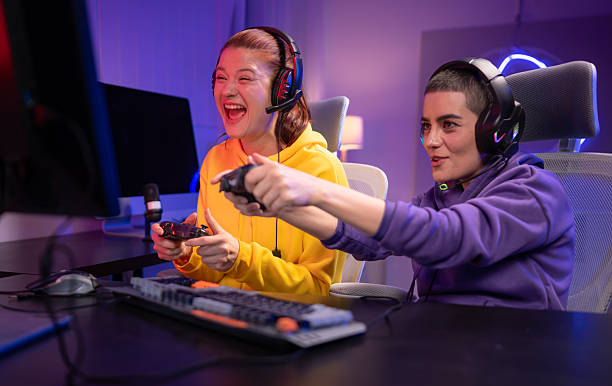
Co-op, short for cooperative gaming, is a game mode in which two or more players work together to complete objectives. Instead of focusing mainly on defeating one another, players cooperate to solve puzzles, defeat enemies, complete missions, or progress through a shared story. Co-op games can support local play, online play, or both. In local co-op, players may share the same computer or screen, depending on the game. Online co-op allows friends to connect through the internet, even when they live in different places.
A good example is It Takes Two, an adventure game designed specifically around two players. The characters have different abilities, and players must coordinate their actions to overcome challenges. One player might distract enemies while another completes an objective. In a survival game, players may collect resources, build shelters, and protect their shared base. Some co-op games have a clear ending, while others offer repeatable missions, survival challenges, or ongoing progression.
This game mode is a strong choice for people who enjoy sharing an experience with friends rather than competing against them. However, co-op does not always mean a game is easy or relaxed. Some titles require careful planning, fast reactions, and close teamwork to succeed.

What Is Multiplayer Gaming?
Multiplayer is a broad term for video games that allow multiple players to participate in the same game experience. These players might cooperate, compete against one another, or take part in different activities within the same game. This is why co-op and MMO games can also be considered multiplayer experiences. They are not necessarily separate from multiplayer as a general category. Instead, they describe particular ways multiplayer gaming can work. For example, a first-person shooter might place players on opposing teams. Each team tries to complete objectives or score more points than the other.
A sports game might let two players compete in a match, while a racing game could allow several players to race on the same track. Multiplayer games can be played locally or online. Some support a small group of friends, while others organize large matches involving many participants. The number of players depends on the game’s design and selected mode.
Many competitive multiplayer games also include matchmaking. This system helps players find opponents or teammates for a match. Other games let users create private lobbies, invite friends, or join community servers. Multiplayer is useful when you want flexibility. You can choose a competitive match, join a cooperative mission, or play a casual game with friends, depending on the available features. It is important to check the game’s specific modes before purchasing it. A title described as multiplayer may focus heavily on competitive matches rather than story-based cooperation or a persistent online world.
What Is an MMO in PC Gaming?
MMO stands for massively multiplayer online. An MMO is a game designed to support a large number of players interacting within a shared online environment. Many MMOs feature persistent worlds that continue to exist even when individual players log out. Instead of completing one match and leaving, players may return to the same world to continue their adventures, improve their characters, collect equipment, join groups, and participate in ongoing activities.
A well-known example is World of Warcraft, which Blizzard classifies as an MMORPG, or massively multiplayer online role-playing game. Its experience includes character progression, quests, group activities, and different realm types.
MMOs often include systems that encourage players to interact. You might join a guild, trade items, complete difficult group missions, or participate in large events. Some games also include player-versus-player combat alongside cooperative activities. However, not every MMO is a fantasy role-playing game. The term describes the large-scale online structure rather than a single setting or gameplay style.
MMOs can be rewarding for players who enjoy long-term progression and active communities. They may also require more time than a short multiplayer match because quests, character development, and group activities can involve extended sessions. Another important consideration is connectivity. Most MMO experiences depend on online services, and access may require a game purchase, subscription, or other payment depending on the title.
Co-op vs Multiplayer vs MMO: Key Differences
The easiest way to understand these terms is to compare their main purposes. Co-op describes a cooperative style of play, multiplayer describes a game with multiple participants, and MMO describes a large-scale online structure. These categories can overlap. An MMO can include co-op missions, while a regular multiplayer game can offer both competitive and cooperative modes. That is why it is more useful to understand what each term describes instead of treating them as completely separate categories.
| Feature | Co-op Games | Multiplayer Games | MMO Games |
| Main focus | Working toward shared goals | Multiple players playing together | Large-scale online interaction |
| Player count | Often small groups, but varies | Varies by game and mode | Designed for large player populations |
| Common activities | Missions, puzzles, shared survival | Competitive matches, co-op, team activities | Quests, progression, social activities, group events |
| World structure | May use individual levels or missions | Often matches, lobbies, or sessions | Frequently features a persistent online world |
| Time commitment | Often flexible | Can range from short matches to long sessions | Often encourages ongoing progression |
| Social interaction | Usually centered on teammates | Depends on the mode | Often includes communities, guilds, or groups |
| Internet required? | Depends on local or online support | Depends on the game mode | Usually required for the main experience |
This comparison is a general guide rather than a strict rule for every title. A co-op game may offer dozens of hours of progression, and some multiplayer games can feature persistent worlds. The exact experience depends on how the developers have designed the game.
The most important question is what you want to do while playing. If you want to work with a friend, look for co-op features. If you want to compete in matches, explore competitive multiplayer games. If you want a long-term online world, consider an MMO.

Popular Examples of Each Game Type
Game examples make these categories easier to recognize. Some titles fit one category especially well, while others combine multiple styles.
Multiplayer examples
Competitive shooters, team-based action games, racing games, and online sports games are common examples of multiplayer gaming. Their main focus may be defeating opponents, winning matches, completing objectives, or improving a competitive ranking.
Some multiplayer titles also offer cooperative modes. Therefore, it is worth checking whether a particular game supports the exact style of play you prefer.
MMO examples
World of Warcraft is a well-known MMORPG that combines a large online world with quests, character development, social systems, and group activities. <Cite refs={[“turn535564search3″,”turn535564search6”]}/>
Other online games may use MMO-style structures without following the traditional fantasy role-playing format. Always review the game’s official description to understand its world structure, player limits, and online requirements.
Online vs Local Co-op and Multiplayer
Another important difference is how players connect. Two people can play together in the same room, connect through a local network, or join each other online. The available options depend on the game. Local co-op allows players to share a physical gaming setup. Some titles support split-screen play, where each person has a separate section of the display. Others use a shared screen. Local multiplayer can also support competitive matches between people using the same device. Online co-op and multiplayer connect players through internet services. This option is convenient when friends live in different cities or countries. However, online play may require accounts, invitations, stable internet access, or additional subscriptions on certain platforms.
Before choosing a game, check its connection options and player limits. A game that supports online multiplayer may not offer split-screen play, and local co-op does not automatically mean that online co-op is available. If you plan to play with friends, confirm whether everyone needs their own copy, whether cross-platform play is supported, and whether the game requires an online account. These details can affect both the cost and convenience of playing together.

Which Game Mode Is Best for Your Playing Style?
The right game mode depends on how you prefer to spend your gaming time. Some players enjoy teamwork and shared goals, while others prefer competitive matches or long-term character development. Co-op is a good fit if you enjoy working with friends, solving problems together, and completing shared missions. It can be especially appealing when you want a coordinated experience without constantly competing against your teammates.
Competitive multiplayer may suit you if you enjoy testing your skills against other players. Ranking systems, team strategies, and short matches can make this style appealing to players who like measurable progress and changing challenges. MMOs are often a better match for players who enjoy exploring a large world over time. They can offer character customization, quests, crafting, trading, social communities, and group challenges. However, the amount of time and ongoing commitment varies between games.
Use these points to narrow down your choice:
- Choose co-op if you want to complete missions, solve puzzles, or survive alongside friends.
- Choose competitive multiplayer if you enjoy matches against other players, team tactics, and skill-based challenges.
- Choose an MMO if you want a large online world, ongoing character progression, and opportunities to join a gaming community.
- Look for a hybrid game if you want several experiences, such as cooperative missions alongside competitive modes or a persistent world.
You do not have to stick to one category. Many PC gamers enjoy different modes depending on their mood, the amount of time they have, and the friends available to play.
Things to Check Before Buying a PC Game
A game description can sound exciting, but the wrong multiplayer setup may make it unsuitable for your needs. Checking a few details before purchasing can help you choose a game that provides the experience you expect. Start by reviewing the official store page and the developer’s website. Look for information about the number of players, online requirements, supported modes, and whether the game is primarily cooperative or competitive.
Next, consider the technical and financial requirements. Some games have relatively modest system requirements, while others need more powerful PC hardware. An MMO may also have a subscription or optional purchases, so check the full cost rather than only the initial price.
The following table summarizes the most useful details to compare before buying.
| What to Check | Why It Matters |
| Player limit | Confirms how many friends can join the same session |
| Co-op or PvP support | Helps you identify whether the game matches your preferred style |
| Local or online play | Determines how you and your friends can connect |
| Crossplay support | Shows whether players on different platforms can play together |
| System requirements | Helps you confirm whether your PC can run the game |
| Internet requirements | Identifies whether a stable connection is needed |
| Subscription or extra costs | Helps you understand the long-term expense |
| Updates and online services | Important for games that depend on active servers |
Also check whether the game offers private sessions or requires you to join public servers. Private lobbies can be helpful when you want to play only with friends, while public matchmaking may be better if you enjoy meeting new players. Finally, review the game’s recent official information before purchasing. Features, online requirements, editions, and available services can change over time.
Common Misunderstandings About Co-op, Multiplayer, and MMO Games
One common misunderstanding is that multiplayer always means competitive gaming. In reality, multiplayer simply refers to an experience involving multiple players. Those players might cooperate, compete, or do both in different modes.
Another mistake is assuming that every co-op game requires an internet connection. Some games offer local co-op, while others support only online play. The store page or official support documentation should explain which options are available. It is also easy to assume that every MMO allows unlimited numbers of players in every activity. Although MMOs are designed for large-scale online interaction, individual dungeons, missions, parties, and competitive activities often have their own player limits.
The term MMO is sometimes confused with MMORPG. An MMORPG is a specific type of MMO that focuses on role-playing elements, such as creating a character, developing abilities, completing quests, and progressing through a game world. Not every MMO must follow that format.
Finally, co-op and MMO are not mutually exclusive categories. An MMO can contain cooperative dungeons, group quests, and team-based activities. Similarly, a multiplayer game can offer both competitive matches and cooperative missions. Understanding these distinctions makes it easier to compare games accurately. Instead of relying on a single label, look at the actual features and activities included in the title.
Conclusion
Understanding co-op vs multiplayer vs MMO helps you choose PC games that match your interests and expectations. Co-op focuses on teamwork and shared objectives, multiplayer covers games that allow multiple people to play together, and MMO games are designed around large-scale online interaction, often within persistent worlds. If you enjoy working with friends, co-op games may be the best place to start. If you like competing against other players, competitive multiplayer can offer exciting matches and opportunities to improve your skills. If you want long-term progression, exploration, and an active online community, an MMO may be worth considering.
Remember that these categories can overlap, so always check the specific features of a game before buying it. Review its player limits, connection options, system requirements, and any additional costs. The best PC game mode is ultimately the one that fits your playing style, available time, and preferred social experience. Once you understand what each category offers, finding your next game becomes much easier.